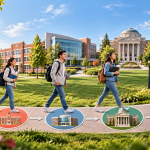
Start Career Planning Before Graduation
Career planning should start well before graduation. Your degree can open paths, but employers also look for evidence of skills, experience, communication, and professional judgment. In the first year, visit the career center, build a simple résumé, create a record of projects and achievements, and explore roles connected to your interests. In later years, add internships, research, student leadership, volunteering, portfolios, and relevant coursework.
Use Official Career Data
Use reliable labor-market information when choosing a direction. The U.S. Bureau of Labor Statistics Occupational Outlook Handbook provides job duties, typical education, pay information, and employment projections for hundreds of occupations. Its Field of Degree pages show how people with broad majors work across different occupations. The data are useful for questions, not guarantees: location, experience, licensure, economic conditions, and work authorization all matter.
Official link: U.S. Bureau of Labor Statistics: Occupational Outlook Handbook
Build a Focused Job Search
Build a focused search strategy. Identify a small number of target roles, read job descriptions, and compare their repeated skills with your current experience. Then improve one gap at a time: a project, a course, a certification, a writing sample, an informational interview, or practice interviews. Tailor each résumé and cover letter to the role; do not use one generic document for every application. Keep a spreadsheet of applications, contacts, deadlines, and follow-ups.
Check Work Authorization Before Accepting a Role
International graduates must understand work authorization before beginning paid work. Students in F-1 status may have options such as curricular practical training (CPT) or optional practical training (OPT), but eligibility, timing, and authorization are specific. Speak with your designated school official and review official U.S. Citizenship and Immigration Services guidance before accepting employment. Do not rely on social-media advice.
Official link: USCIS: Students and Employment
Build Employability During Your Degree
Gain evidence of your skills
Employers often want more than a degree title. Build a portfolio of work that demonstrates what you can do: class projects, research posters, lab reports, design work, code samples, presentations, writing, event plans, or analysis. Keep a record of your contribution, the tools you used, the result, and feedback received. This makes résumé writing and interviews much easier.
Use internships and campus opportunities strategically
Choose experiences that teach skills connected to your target roles. An internship, research assistantship, student organization leadership position, volunteer role, or campus job can all be valuable when you can explain what you learned. Before accepting paid employment or an internship, international students must confirm authorization with the designated school official.
Run a More Effective Job Search
Start by identifying a small number of roles and employers that fit your skills and interests. Read several job descriptions and list repeated requirements. Then close one gap at a time through coursework, a project, a credential, or practice. Tailor your résumé to show evidence of the relevant skills, and prepare brief stories that explain a challenge, your actions, and the result.
Official link: U.S. Bureau of Labor Statistics: How to Find a Job
Prepare for Professional Conversations
Use your career center for résumé review, interview practice, career fairs, and alumni connections. When you meet someone in your field, ask thoughtful questions about the work, skills, and entry routes rather than requesting a job immediately. Send a short thank-you message afterward and keep your professional profile accurate and current.
Plan Your Next Step Realistically
Some careers begin with entry-level work; others require graduate study, licensing, or further training. Compare the cost and return of additional education before enrolling. For international students, work authorization has its own rules and timelines. Begin discussions with the international office and career center well before graduation, because certain options require advance planning.
Continue Learning After Graduation
Your first role is a starting point, not a permanent label. Keep developing skills, seek feedback, maintain professional relationships, and reassess your goals as you gain experience. A deliberate, evidence-based approach is more sustainable than choosing roles only by job title or salary.
Career progress is rarely a straight line. Use mentors, alumni, professional associations, faculty, and career advisers to test ideas and widen your network. The best first role is one that develops transferable skills and moves you toward the work you value.
Official resources
- U.S. Bureau of Labor Statistics: Occupational Outlook Handbook — https://www.bls.gov/ooh/
- U.S. Bureau of Labor Statistics: How to find a job — https://www.bls.gov/ooh/how-to-find-a-job/home.htm
- USCIS: Practical training for F-1 students — https://www.uscis.gov/working-in-the-united-states/students-and-exchange-visitors/students-and-employment